What are you looking for?
A reusable support system only delivers long-term value when its components are inspected, handled, and maintained correctly. Concrete residue, damaged braces, distorted frames, blocked jack threads, and missing connectors can gradually reduce installation accuracy and slow the next formwork cycle.
For contractors, effective shoring tower management begins before assembly and continues after dismantling. A structured inspection process helps prevent unexpected shortages, repeated adjustments, and avoidable delays during slab construction.
The first inspection should take place during delivery rather than immediately before installation.
Compare the shipment with the packing list and separate components by type. Check whether the delivery includes:
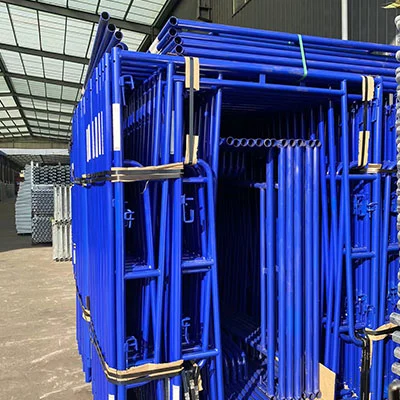
Main tower frames;
Horizontal and diagonal braces;
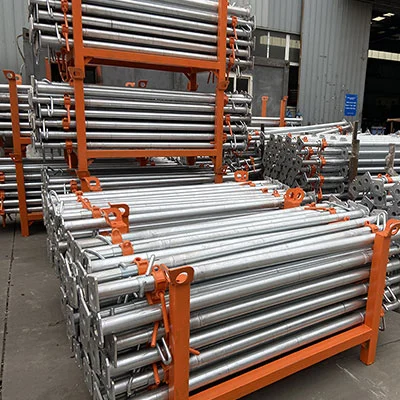
Base and head jacks;
Connecting pins and locking devices;
Beam supports or fork heads;
Access and platform components;
Movement or lifting accessories;
Spare parts.
Record missing or damaged items before the equipment is distributed across the site. Small components are particularly easy to lose when frames and accessories are unloaded into different storage areas.
Every frame should be visually checked for conditions that could affect alignment or connection.
Look for:
Bent vertical or horizontal members;
Cracked or damaged welds;
Distorted connection points;
Enlarged pin holes;
Severe corrosion;
Concrete buildup around connectors;
Unauthorized drilling or welding;
Missing locking devices.
Diagonal braces should be straight and able to connect without excessive force. A brace that does not fit may indicate damage to the brace, incorrect frame spacing, or distortion in the tower frame.
Damaged components should be clearly marked and moved to a separate inspection area. They should not remain mixed with serviceable stock.
Base and head jacks are essential for setting the tower height and transferring loads. Threads contaminated with concrete or dirt can make adjustment difficult and encourage workers to use inappropriate tools or excessive force.
Before installation:
Remove dirt and concrete residue;
Inspect the spindle for bending;
Check thread condition;
Confirm that adjustment nuts rotate smoothly;
Inspect base plates and head supports;
Verify the permitted extension range.
Jacks should not be extended beyond the limit stated in the system instructions. Excessive extension can reduce stability and change the intended load-transfer condition.
A tower that appears vertical may still be incomplete or incorrectly configured.
During assembly, confirm:
Correct frame type and orientation;
Required number of frame levels;
Complete diagonal bracing;
Proper pin and locking-device installation;
Correct base and head-jack positions;
Tower spacing and orientation;
Required ties between adjacent towers;
Correct primary-beam support;
Verticality and level.
For modular shoring tower systems, components should be assembled according to the approved configuration rather than mixed with visually similar parts from another support system. Unverified substitutions may affect dimensions, connections, and system performance.
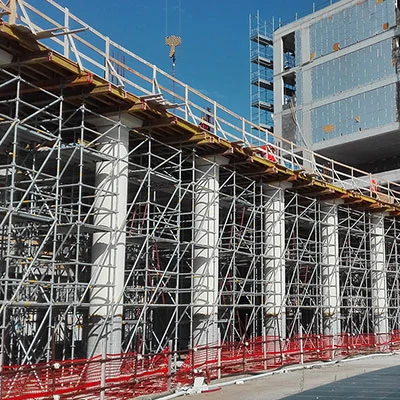
The final inspection should cover the complete support structure, not only individual towers.
The responsible team should check:
Tower positions against the layout;
Base support and sole boards;
Jack extensions;
Frame verticality;
Bracing in both directions;
Beam centering on head supports;
Connections between formwork and towers;
Access routes and exclusion zones;
Loose materials stored on the system;
Signs of settlement or movement;
Changes made after the previous inspection.
The inspection should be documented before concrete placement begins. Any site change affecting the support layout must be reviewed before the pour.
Concrete placement can create changing loads across the support system. Uneven pouring, material storage, equipment movement, or unexpected impact may affect local tower reactions.
During the pour, assigned personnel should monitor:
Base settlement;
Jack and head-support positions;
Tower verticality;
Bracing connections;
Primary-beam movement;
Unusual sounds;
Local deformation;
Changes near slab edges and beams.
Workers should not adjust loaded towers without authorization. Any unexpected movement should be managed according to the approved site procedure.
Dismantling should begin only after the concrete has achieved the required condition and formal release has been given.
A controlled sequence normally includes:
Remove stored materials and unnecessary loads;
Establish the dismantling area;
Release the formwork according to the approved sequence;
Lower jacks gradually where required;
Secure towers before moving complete units;
Remove loose components before crane lifting;
Prevent frames from being dropped or dragged.
Improper dismantling can damage connectors, bend braces, and distort frame corners even when the components performed correctly during the pour.
Concrete is easier to remove before it fully hardens. Delayed cleaning can block holes, threads, and connection points.
Use cleaning methods that do not damage protective coatings or alter component dimensions. Pay particular attention to:
Jack threads;
Brace connection points;
Frame pins and sockets;
Base plates;
Head supports;
Lifting points.
After cleaning, allow components to dry before stacking or placing them in enclosed storage areas.
Not every damaged part must be discarded, but repairs should be evaluated and completed through an approved process.
Create three clearly identified groups:
Ready for reuse;
Awaiting inspection or repair;
Rejected from service.
Maintain records of recurring damage. Repeated bending at the same location may indicate improper handling, unsuitable lifting methods, or incorrect assembly practices.
Keeping common replacement parts on site can prevent a small shortage from delaying the next tower cycle. Useful spares may include pins, locking devices, brace connectors, and adjustment components.
Frames should be stacked on level supports and secured against movement. Accessories should be stored in labeled containers rather than placed loosely between frames.
Good storage practices include:
Separating parts by system and size;
Keeping jacks away from standing water;
Protecting threads from contamination;
Using racks or stillages for small parts;
Recording quantities returned from each work zone;
Securing loads during internal and international transport.
Organized storage reduces search time and makes the next pre-assembly inspection more efficient.
A simple cycle record can include:
Installation area;
Assembly and striking dates;
Components used;
Damaged or missing parts;
Repairs completed;
Cleaning status;
Next planned location;
Supervisor approval.
These records help contractors evaluate labor requirements, component loss, repair frequency, and actual reuse performance. They can also reveal whether site delays are caused by the product, handling practices, or poor inventory coordination.
Maintaining a shoring tower is not limited to removing concrete after each pour. Effective management covers delivery inspection, correct assembly, pre-pour approval, continuous monitoring, controlled dismantling, cleaning, repair, and organized storage.
A consistent inspection and reuse process helps keep components available, improves installation accuracy, and supports efficient movement between pour zones. It also allows contractors to identify damage before it becomes a site problem.
All inspection, repair, assembly, and reuse decisions should follow the approved temporary works design, project procedures, and system instructions.
Inspect components at delivery, before assembly, after erection, before concrete placement, during use, and after dismantling.
It should be removed from service and assessed through an approved repair process. Site workers should not make unauthorized repairs.
Common causes include concrete buildup, dirt, corrosion, damaged threads, or spindle deformation.
Some systems allow complete units to be moved by crane or trolley. The approved lifting method, tower stability, route, and equipment capacity must be confirmed first.
Pins, locking devices, brace connectors, nuts, and other small accessories require particularly careful inventory control.