


What are you looking for?
In modern construction, formwork engineering is one of the fundamental aspects of concrete structure construction. Particularly in slab construction, wooden beam formwork has become a widely adopted formwork solution on construction sites due to its advantages of being lightweight, having high strength, and being reusable. This article will focus on its structural characteristics and highlight the application areas of this system in various construction projects.
Wooden beam formwork is a system that uses glued laminated timber beams (usually H20 type) as the main load-bearing component, complemented by film-faced plywood panels, steel supports, and connectors. This system is used for shaping cast-in-place concrete slabs and features notable characteristics such as being lightweight, easy to assemble and disassemble, and having a high number of reuses, making it suitable for slab construction with various span and load requirements.
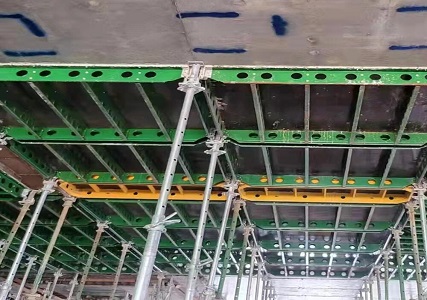
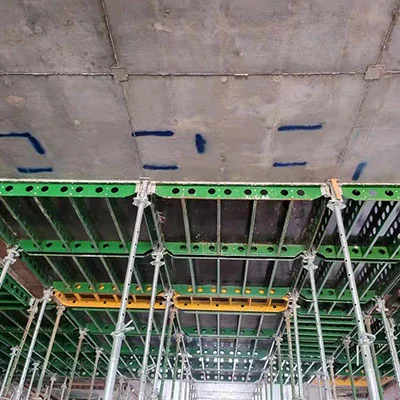
A typical wooden beam formwork includes the following parts:
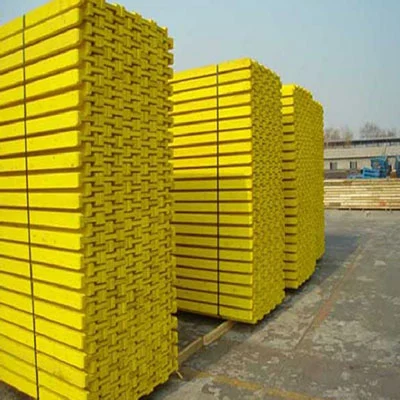
Glued laminated timber beams: The core components for load-bearing and force transmission, usually H20 Euro-standard wooden beams, are lightweight and high-strength.
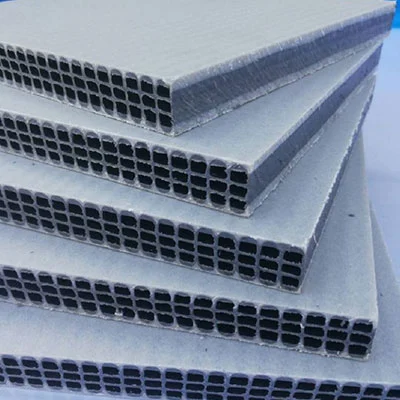
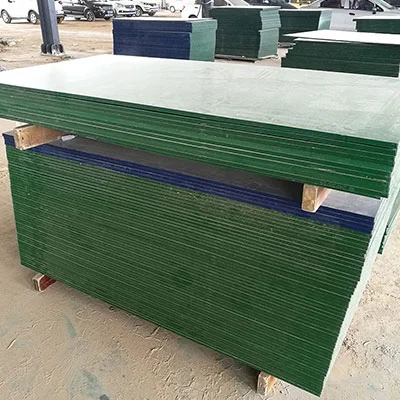
Film-faced plywood: Used as the bottom form of the slab, with a smooth surface to facilitate concrete shaping.
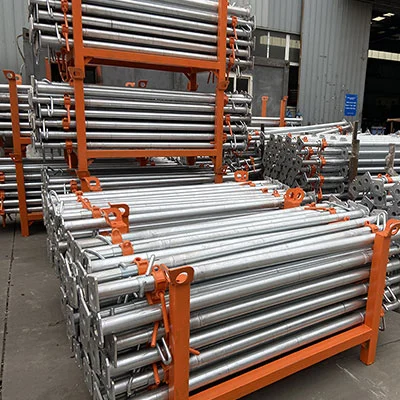
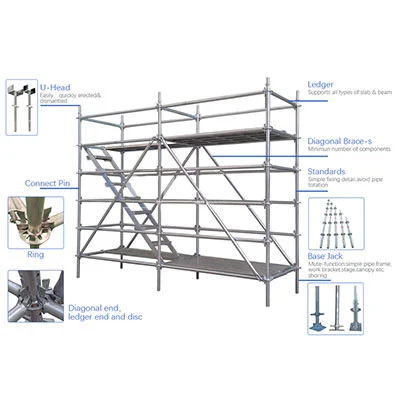
Steel support poles: Support the weight of the entire system, adjust the height, and ensure structural stability.
Connectors and safety accessories: Such as head supports, U-heads, tripods, etc., used to fix and enhance system stability.
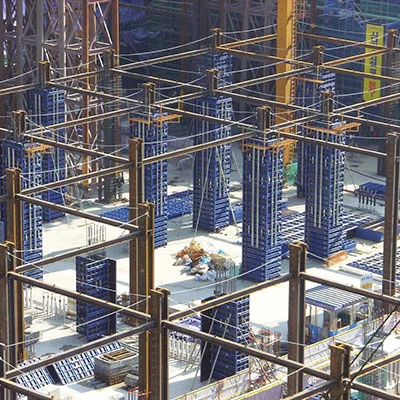
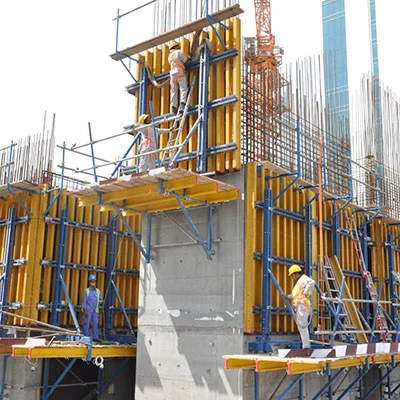
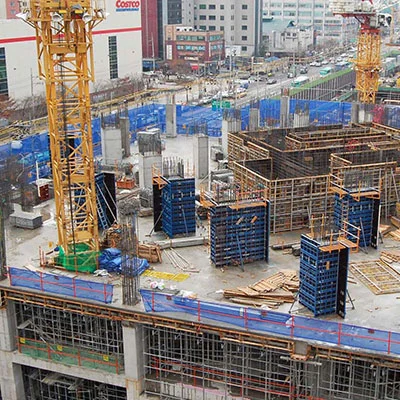
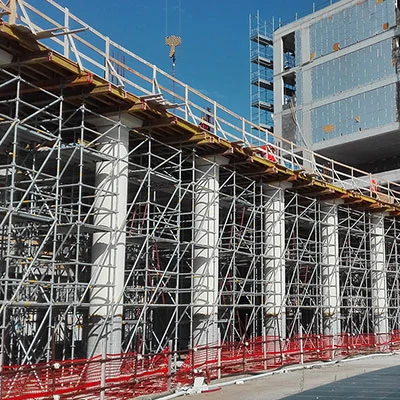
Wooden beam formwork is suitable for slab construction in high-rise buildings such as commercial residences and office buildings. The system can flexibly adjust the support height according to the slab height, making construction highly efficient and allowing for the quick completion of formwork setup and removal across different floors within the construction cycle. It can also be integrated with a climbing formwork system, enabling safe and efficient concrete casting for multi-story structures.
In areas with narrow spaces and complex structures such as basements, subway stations, and underground parking lots, the modular design and lightweight characteristics of the wooden beam formwork system allow for quick adaptation to different construction spaces, solving the challenges of formwork setup in confined areas.
For slab or beam-slab structures with large spans, wooden beam formwork can meet construction demands under heavy load conditions by densifying primary and secondary beams and increasing support density. It is widely used in heavy-structure projects such as industrial plants and warehouses.
This system is also suitable for the cast-in-place construction of some bridge approach slabs and ramp structures. The flexible assembly characteristics of the formwork facilitate adjustments and assembly by the construction team, especially in temporary construction access roads or corner bridge slab areas.
The wooden beam formwork system has a high reuse rate, making it suitable for projects requiring frequent repeated operations, such as residential communities, standardized buildings, and prefabricated structure splicing slabs. It is especially applicable to projects with high demands on the construction cycle.
As an efficient and reliable formwork support system, wooden beam formwork has been widely used in numerous construction scenarios due to its excellent load-bearing performance, flexible structural combination, and long service life. It not only improves construction efficiency but also ensures the quality of concrete shaping, making it an indispensable formwork system solution in modern construction engineering.